
French Roulette Guide
Learn the rules, compare the bets and understand the odds.
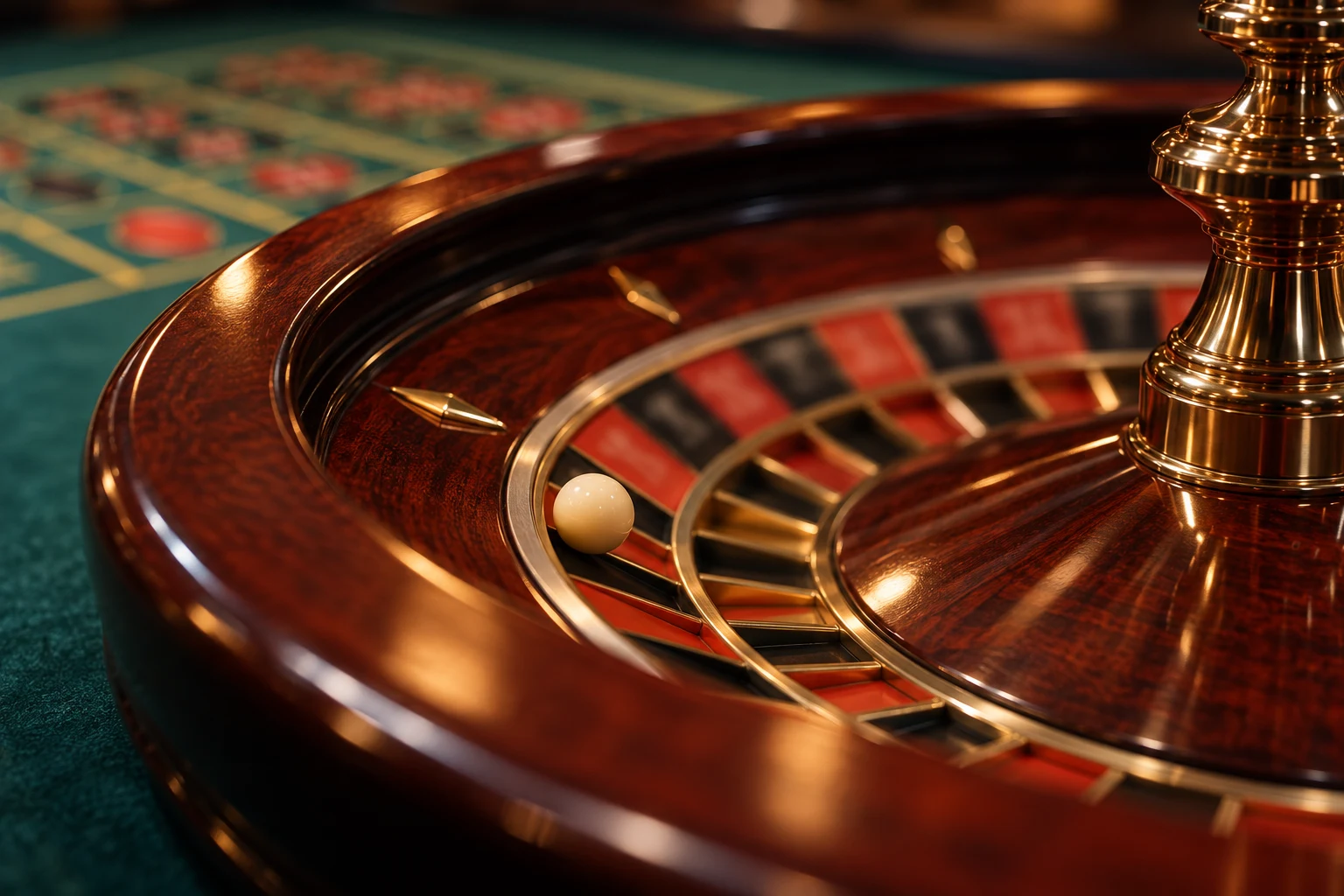
French roulette is the original version of the world's most famous casino wheel game, and for players who know what to look for, it is also the best. It uses the same single-zero wheel as European roulette, but adds a special rule called La Partage that cuts the house edge on even-money bets in half. Add in the elegant table layout, the French betting terms and the famous call bets around the wheel, and you have a game that rewards players who take the time to understand it.
This complete guide to French roulette for Canadian players explains everything: the history of the game, how the wheel and table work, every bet and payout, the La Partage and En Prison rules, call bets, odds, strategies and where to play French roulette online in Canada.
What this guide covers
- What French roulette is
- A short history of roulette in France
- The French roulette wheel
- The French roulette table and its terms
- How to play French roulette step by step
- Inside bets and payouts
- Outside bets and payouts
- La Partage and En Prison explained
- Call bets: Voisins, Tiers, Orphelins and Jeu Zéro
- Odds and house edge
- French vs European vs American roulette
- Strategies and betting systems
- Tips for playing French roulette
- Playing French roulette online in Canada
- Responsible gambling
- Frequently asked questions
What Is French Roulette?
French roulette is a single-zero roulette game played on a wheel with 37 pockets: the numbers 1 to 36 plus one green zero. Players bet on where a small ball will land after the croupier spins the wheel in one direction and launches the ball in the other. Bets can be placed on single numbers, groups of numbers, colours, odd or even, high or low, and sections of the wheel.
What separates French roulette from other versions is not the wheel itself, which is the same as the European wheel, but three key features:
- The La Partage rule, which returns half of your even-money bet if the ball lands on zero.
- The En Prison rule, offered at some tables as an alternative to La Partage.
- The French table layout, with betting areas labelled in French and a racetrack for call bets around the wheel.
Together, these features give French roulette the lowest house edge of any standard roulette game when you play the even-money bets.
A Short History of Roulette in France
The word roulette means "little wheel" in French, and the game as we know it took shape in 18th-century Paris. Early wheels had both a single and a double zero, similar to today's American wheel. In 1843, the brothers François and Louis Blanc introduced a single-zero wheel at their casino in Bad Homburg, Germany, to attract players away from rivals by offering better odds.
When François Blanc later developed the casino at Monte Carlo, the single-zero wheel became the standard in Europe. Monaco's casino helped spread the elegant French style of play around the world, along with the French terms that are still used at high-end tables today. When roulette crossed the Atlantic, American casinos kept the double zero, which is why the game developed into distinct European and American versions.
The French Roulette Wheel
The French wheel has 37 numbered pockets. Numbers 1 to 36 alternate between red and black, and the single zero is green. The numbers are not arranged in order. Instead, they follow a fixed sequence designed to mix high and low, odd and even, and red and black as evenly as possible.
Going clockwise from the zero, the sequence on a single-zero wheel is:
0, 32, 15, 19, 4, 21, 2, 25, 17, 34, 6, 27, 13, 36, 11, 30, 8, 23, 10, 5, 24, 16, 33, 1, 20, 14, 31, 9, 22, 18, 29, 7, 28, 12, 35, 3, 26
Knowing this order is especially useful in French roulette, because the call bets described later in this guide cover groups of numbers that sit next to each other on the wheel rather than on the table.
The French Roulette Table and Its Terms
The traditional French roulette table is long and symmetrical, often with the wheel in the centre and betting areas on both sides. In land-based casinos, several croupiers work the table, using a long stick called a rake to move chips. Online versions usually show a single layout, but they keep the French labels.
Here are the French terms you will see on the table and what they mean:
| French Term | English Meaning | Numbers Covered |
|---|---|---|
| Rouge | Red | 18 red numbers |
| Noir | Black | 18 black numbers |
| Pair | Even | 18 even numbers |
| Impair | Odd | 18 odd numbers |
| Manque | Low | 1 to 18 |
| Passe | High | 19 to 36 |
| P12 (Première) | First dozen | 1 to 12 |
| M12 (Moyenne) | Middle dozen | 13 to 24 |
| D12 (Dernière) | Last dozen | 25 to 36 |
| Colonne | Column | 12 numbers in a column |
Other French terms used for inside bets include plein (straight up), cheval (split), transversale pleine (street), carré (corner), transversale simple or sixain (six line) and quatre premiers (first four).
How to Play French Roulette Step by Step
Step 1: Choose your chip value
Online, select a chip value from the chip tray. In a land-based casino, you exchange cash for coloured roulette chips, and each player has their own colour so bets are easy to track.
Step 2: Place your bets
Place chips on the layout for the bets you want. You can combine as many bets as you like, within the table minimums and maximums. Call bets can be placed on the racetrack, or announced to the croupier in a live game.
Step 3: The spin
The croupier spins the wheel and launches the ball in the opposite direction. Shortly before the ball slows, the croupier announces "Rien ne va plus," meaning no more bets.
Step 4: The result
The ball drops into a pocket, and the croupier marks the winning number with a marker called the dolly. Losing bets are collected and winning bets are paid.
Step 5: La Partage or En Prison on zero
If the ball lands on zero, even-money bets are not simply lost. Depending on the table, half your stake is returned (La Partage) or your bet is held for the next spin (En Prison).
Inside Bets and Payouts
Inside bets are placed on the numbered part of the layout. They have higher payouts and lower chances of winning.
| Bet | Numbers | Payout | Win Chance |
|---|---|---|---|
| Straight up (plein) | 1 | 35 to 1 | 2.70% |
| Split (cheval) | 2 | 17 to 1 | 5.41% |
| Street (transversale pleine) | 3 | 11 to 1 | 8.11% |
| Corner (carré) | 4 | 8 to 1 | 10.81% |
| First four (quatre premiers) | 0, 1, 2, 3 | 8 to 1 | 10.81% |
| Six line (sixain) | 6 | 5 to 1 | 16.22% |
A trio or basket bet covering 0, 1 and 2 or 0, 2 and 3 is also available at many tables and pays 11 to 1, like a street.
Outside Bets and Payouts
Outside bets cover larger groups of numbers. They pay less, but win more often.
| Bet | Numbers | Payout | Win Chance |
|---|---|---|---|
| Rouge or Noir | 18 | 1 to 1 | 48.65% |
| Pair or Impair | 18 | 1 to 1 | 48.65% |
| Manque or Passe | 18 | 1 to 1 | 48.65% |
| Dozen | 12 | 2 to 1 | 32.43% |
| Column | 12 | 2 to 1 | 32.43% |
The even-money bets, also called chances simples in French, are where French roulette truly shines, because they are the bets protected by La Partage and En Prison.
La Partage and En Prison Explained
La Partage
La Partage means "the sharing" or "the division." If the ball lands on zero, every even-money bet loses only half its stake. The other half is returned to the player.
For example, if you bet $20 on Rouge and the ball lands on zero, you get $10 back instead of losing the full $20. This single rule reduces the house edge on even-money bets from 2.70% to just 1.35%.
En Prison
En Prison means "in prison." When the ball lands on zero, your even-money bet is not lost or halved. Instead, it is "imprisoned" and stays on the table for the next spin.
- If your bet wins on the next spin, you get your original stake back, with no extra winnings.
- If it loses on the next spin, the stake is lost.
- Depending on house rules, if zero appears again, the bet may stay imprisoned or be lost.
En Prison also brings the house edge on even-money bets down to about 1.35%, or very slightly less under some house rules. Many online French roulette games offer La Partage only, while some land-based tables offer both.
Key point: La Partage and En Prison only apply to even-money bets. Straight ups, splits, dozens, columns and all other bets still carry the standard 2.70% house edge.
Call Bets: Voisins, Tiers, Orphelins and Jeu Zéro
Call bets, also known as announced bets, are a signature feature of French roulette. Instead of covering numbers that sit together on the table, they cover sections of the wheel. Online, you place them on the oval racetrack beside the layout. In a land-based casino, you announce them to the croupier.
Voisins du Zéro (Neighbours of Zero)
This bet covers the 17 numbers closest to zero on the wheel, from 22 to 25: 22, 18, 29, 7, 28, 12, 35, 3, 26, 0, 32, 15, 19, 4, 21, 2 and 25. It costs 9 chips:
- 2 chips on the 0-2-3 trio
- 1 chip each on the splits 4-7, 12-15, 18-21, 19-22 and 32-35
- 2 chips on the 25-26-28-29 corner
Tiers du Cylindre (Thirds of the Wheel)
This bet covers the 12 numbers on the side of the wheel opposite zero: 27, 13, 36, 11, 30, 8, 23, 10, 5, 24, 16 and 33. It costs 6 chips, one each on the splits 5-8, 10-11, 13-16, 23-24, 27-30 and 33-36.
Orphelins (Orphans)
The orphans are the eight numbers not covered by Voisins or Tiers: 1, 20, 14, 31, 9 on one side of the wheel and 17, 34, 6 on the other. The bet costs 5 chips: one straight up on 1 and one each on the splits 6-9, 14-17, 17-20 and 31-34.
Jeu Zéro (Zero Game)
Jeu Zéro covers the seven numbers closest to zero: 12, 35, 3, 26, 0, 32 and 15. It costs 4 chips: one each on the splits 0-3, 12-15 and 32-35, and one straight up on 26.
Neighbour bets and finales
Many tables also accept neighbour bets, where you choose a number and an equal number of its neighbours on each side, usually two. For example, "17 and the neighbours" covers 2, 25, 17, 34 and 6. Finales are bets on all numbers ending in the same digit, so "finale 7" covers 7, 17 and 27.
Call bets do not change the house edge, which remains 2.70% on every chip. They are simply a convenient and traditional way to cover parts of the wheel.
Odds and House Edge
The house edge in roulette comes from the zero. On a single-zero wheel, every bet pays as if there were only 36 numbers, while the true chance is based on 37. That gap creates a house edge of 2.70% on every standard bet.
With La Partage or En Prison, even-money bets lose only half as much on zero, which halves the edge to 1.35%. Expressed as return to player (RTP):
| Bet Type | House Edge | RTP |
|---|---|---|
| Even-money with La Partage | 1.35% | 98.65% |
| All other French roulette bets | 2.70% | 97.30% |
In practical terms, if you wager $1,000 in total on even-money bets in French roulette, you would expect to lose about $13.50 on average over the long run. On a single-zero wheel without La Partage, the expected loss would be about $27. On an American double-zero wheel, it would be about $52.60.
French vs European vs American Roulette
| Feature | French | European | American |
|---|---|---|---|
| Pockets | 37 | 37 | 38 |
| Zeros | 0 | 0 | 0 and 00 |
| La Partage | Yes | Usually no | No |
| Even-money edge | 1.35% | 2.70% | 5.26% |
| Other bets edge | 2.70% | 2.70% | 5.26% |
| Call bets | Standard | Often available | Rare |
The comparison makes the choice simple. If French roulette is available, it offers the best value, especially for players who prefer even-money bets. European roulette is a close second, and American roulette carries roughly double the house edge of European.
Strategies and Betting Systems
No betting system can overcome the house edge in roulette, because every spin is independent and every bet has a negative expected value. Systems change how you size your bets and how your results feel in the short term, not your long-term odds. That said, French roulette is the best game to use them with, because the even-money bets most systems rely on have the lowest edge.
Martingale
Double your even-money bet after each loss, and go back to your starting stake after a win. A single win recovers all previous losses plus one unit. The danger is that a losing streak makes bets grow very quickly, and you can hit the table maximum or run out of bankroll. Starting at $5, seven losses in a row would require a $640 bet.
Reverse Martingale (Paroli)
Double your bet after each win instead, and return to your base stake after a loss or after a set number of wins, such as three. This limits losses to your base stake while letting winning streaks build.
D'Alembert
Named after a French mathematician, this system raises your bet by one unit after a loss and lowers it by one unit after a win. It is far gentler than Martingale and suits players who want a steady, low-risk approach.
Fibonacci
Bet amounts follow the Fibonacci sequence: 1, 1, 2, 3, 5, 8, 13 and so on. Move one step forward after a loss and two steps back after a win. Bets grow more slowly than with Martingale, but long losing streaks can still become expensive.
Labouchère
Write a short line of numbers, such as 1-2-3-4. Your bet is the sum of the first and last numbers. Cross both off after a win, and add the lost amount to the end after a loss. When the line is cleared, you have reached your target profit.
Using call bets as a strategy
Some players like to cover sections of the wheel using Voisins du Zéro or Tiers du Cylindre, especially in live games. This is a fun way to play the wheel itself, but because every chip carries the standard 2.70% edge, it does not improve your odds.
Tips for Playing French Roulette
- Always confirm the rules. Check the game information to make sure La Partage or En Prison is actually offered. Some games use a French-style layout without the rule.
- Favour even-money bets. They are the only bets that benefit from the 1.35% edge.
- Set a budget before you play. Decide how much you are comfortable spending and stop when it is gone.
- Pick a sensible stake. Your bankroll should cover many spins. A good rule is at least 50 base bets per session.
- Avoid chasing losses. Increasing your stakes to win back losses is the fastest way to empty your balance.
- Ignore hot and cold numbers. Past results do not affect future spins.
- Practise for free. Many casinos offer demo versions of French roulette so you can learn the layout and call bets without risk.
- Watch your spin speed. Digital roulette can be very fast. Slower live dealer games help your money last longer.
- Read bonus terms carefully. Roulette often contributes little or nothing to bonus wagering requirements.
- Take breaks. Regular pauses help you stay in control of your play.
Playing French Roulette Online in Canada
French roulette is widely available at online casinos serving Canadian players, both as digital RNG games and live dealer tables streamed from studios.
Is it legal?
Online gambling in Canada is regulated by each province. Ontario has a regulated private market overseen by iGaming Ontario and the AGCO, and Alberta opened its own regulated market in July 2026. In other provinces, the provincial lottery corporations run official online casinos, such as PlayNow, Loto-Québec and Atlantic Lottery. The legal age is 19 in most provinces and 18 in Alberta, Manitoba and Quebec.
Digital vs live dealer French roulette
- Digital French roulette uses a certified random number generator. It is fast, allows low stakes, and is often available in demo mode.
- Live dealer French roulette uses a real wheel and croupier on video. It is slower and more social, with a genuine casino atmosphere, though minimum bets are usually higher.
What to look for in a casino
- A valid licence from your province or a reputable regulator
- French roulette with La Partage clearly stated in the rules
- Canadian dollar accounts and Interac deposits and withdrawals
- Low table minimums if you are on a budget
- French-language support, especially for players in Quebec
- Responsible gambling tools such as deposit limits and time-outs
Taxes on winnings
For recreational players, gambling winnings are generally not taxable in Canada. Different rules may apply if gambling is your profession.
Responsible Gambling
Roulette is a game of chance meant for entertainment. Always play with money you can afford to lose, use the limit tools offered by licensed casinos, and step away if the game stops being fun. If you or someone you know needs support, free and confidential help is available:
- ConnexOntario for players in Ontario, available 24/7.
- GameSense, a responsible gambling program used by several provinces.
- Responsible Gambling Council, a national independent organization.
Frequently Asked Questions About French Roulette
What is the difference between French and European roulette?
Both use the same single-zero wheel. French roulette adds the La Partage or En Prison rule, which halves the house edge on even-money bets to 1.35%, and uses a French-language layout with a racetrack for call bets.
What is the house edge in French roulette?
It is 1.35% on even-money bets with La Partage or En Prison, and 2.70% on all other bets.
Is French roulette the best roulette to play?
For most players, yes. It has the lowest house edge of the standard roulette versions, especially if you bet on red or black, odd or even, or high or low.
What does "Rien ne va plus" mean?
It means "nothing goes anymore," and it is the croupier's signal that betting is closed for the current spin.
Do call bets have better odds?
No. Call bets are combinations of standard inside bets, so they carry the same 2.70% house edge.
Can I play French roulette for free?
Yes. Many online casinos and game providers offer demo versions of digital French roulette.
Is there a winning strategy for French roulette?
No strategy can beat the house edge. The smartest approach is to choose French roulette with La Partage, focus on even-money bets and manage your bankroll carefully.
Can I play French roulette in French?
Yes. Many online casinos available in Canada, including Loto-Québec's platform, offer French-language interfaces and support.
Final Thoughts
French roulette combines centuries of tradition with the best odds you will find on a roulette wheel. Learn the French terms, understand La Partage, try the call bets for fun, and focus on even-money bets when you want the most value. Pair that with a clear budget and a licensed Canadian-friendly casino, and you will be playing roulette the way it was originally meant to be played.