
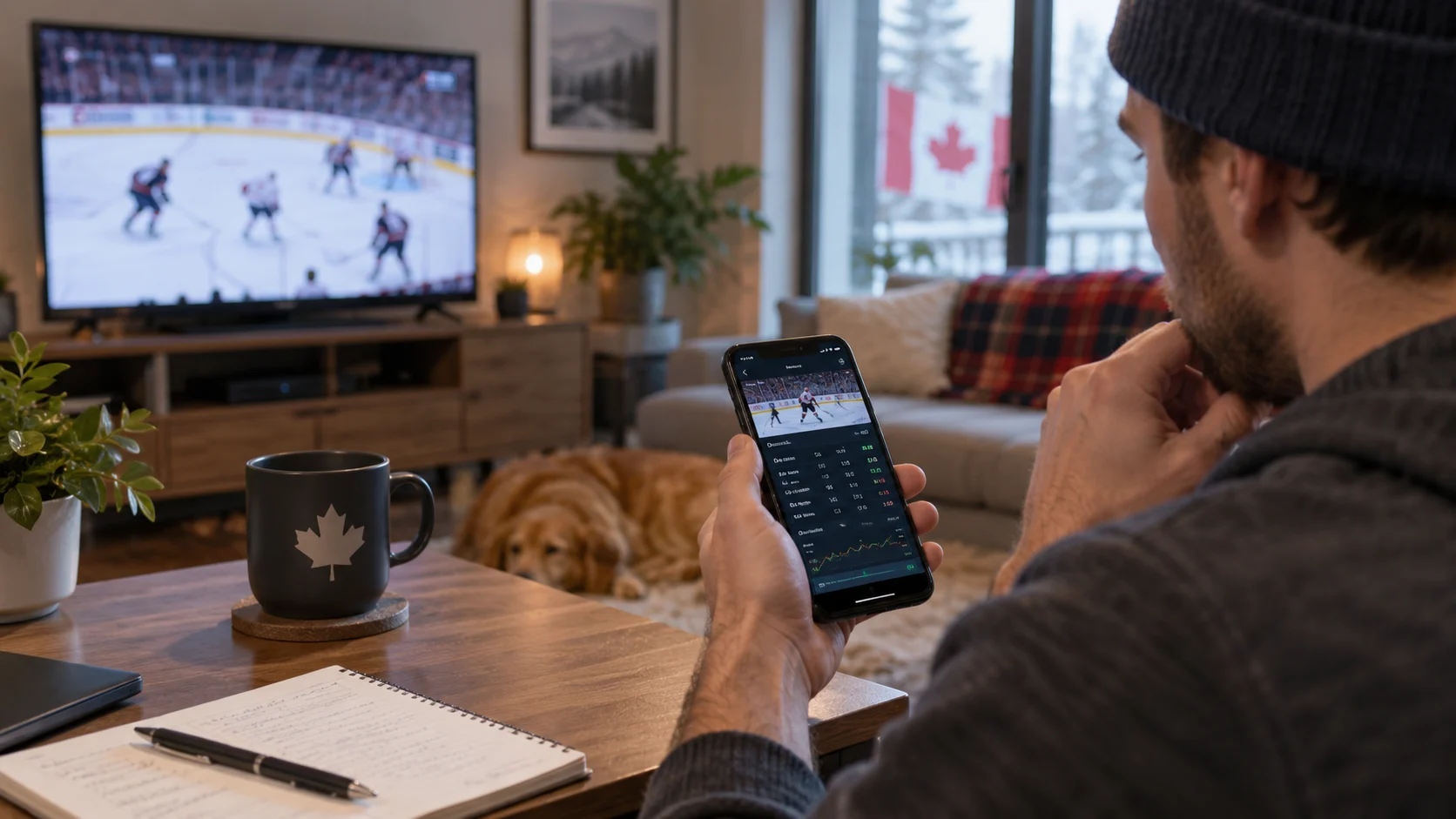
Props settle on a named player's output rather than which team wins the game.
Line assignment, power-play unit and ice time directly influence opportunity.
Goals, points, shots, saves and combinations create different ways to express a view.
Opponent defence, pace and expected shot volume can change the same player's outlook.
Introduction
Not every hockey bettor is primarily interested in which team wins or how many total goals a game produces. Player props shift the focus to individual performance - goals, shots, points, saves and other statistical categories tied to a specific player rather than the team result as a whole.
This creates a more granular NHL market where a bettor can hold a strong view on one player's likely performance even when the overall game outcome remains uncertain.
What Are Player Props?
Player props, short for proposition bets, are wagers tied to a specific named player's statistical output during a game. They are independent of the overall team result, so a bettor can back a player's shots or points without needing to predict who wins.
Team-level market
- Moneyline
- Puck line
- Game total
- Focuses on the matchup outcome
Player prop market
- Goals or points
- Shots on goal
- Goalie saves
- Focuses on individual output
Major Categories of NHL Player Props
Goal-scoring markets
Anytime goalscorer asks whether a skater scores at any point. First goalscorer requires the game's opening goal, while two or more goals targets a rarer multi-goal performance.
Points markets
Total points combine goals and assists, making them useful for players whose offensive contribution comes through both finishing and playmaking.
Shots on goal
Shots props focus on volume rather than finishing. A player can miss a goals prop while still clearing a shots total if their underlying attempt rate remains strong.
Goaltender markets
Total saves depend heavily on expected opposing shot volume. Shutout props are much rarer and usually carry longer prices.
Combination props
Some sportsbooks combine multiple outcomes for one player, such as recording both a goal and an assist, in exchange for a higher potential payout.
Power-play-linked props
For players on top units, power-play deployment can materially affect goals, points and shots opportunities during a game.
| Prop type | What must happen | Primary driver | Variance |
|---|---|---|---|
| Anytime goalscorer | Player scores at least once | Scoring role and chance quality | High |
| First goalscorer | Player scores the first goal | Early deployment and finishing | Very high |
| Points total | Goals + assists clear the line | Role, linemates and power play | Medium-high |
| Shots on goal | Shots on net clear the line | Shot volume and ice time | Medium |
| Goalie saves | Saves clear the posted line | Opponent shot volume | Medium |
| Shutout | Goalie allows zero goals | Goalie form + defensive matchup | Very high |

How NHL Player Props Are Priced
Player prop pricing draws on season-long and recent-form output, role and deployment, expected ice time, power-play assignment and the specific opponent. For goaltender props, the other team's shot generation is especially important.
Because individual player performance is noisier than team-level outcomes, the source guide notes that prop markets can carry wider sportsbook margins than core markets such as the moneyline.
Key Factors That Influence Player Prop Outcomes
Line combinations and deployment
A move to the top line or first power-play unit can increase both ice time and quality opportunities for goals, points and shots.
Matchup-specific defence
The same player can face very different prop conditions against a structured defensive team versus a high-event opponent.
Power-play opportunity
Expected penalty volume and power-play usage can materially affect offensive props for players who receive significant special-teams time.
Injury and rest status
Late scratches, minor injuries or reduced minutes on back-to-backs can change every category of player prop.
Goalie-specific shot volume
For saves props, expected workload can matter as much as goalie quality. A strong goalie cannot make saves on shots that never arrive.
Opponent pace and game environment
High-event matchups can create more opportunities for shots, points and saves than slower, more defensive games.
Strategic Approaches to Player Props
Choose depth over breadth
Following a smaller group of teams or players closely can produce better-informed decisions than trying to cover the entire slate superficially.
Separate shot volume from finishing
A player can be in a scoring slump while maintaining strong shot volume, which may still support an Over on shots.
Monitor lines close to puck drop
Late scratches and line changes can alter role, ice time and power-play usage quickly.
Express a player view independently
If you trust a player's role or volume but not the team result, a prop can isolate that opinion more directly.
Shot Volume vs. Finishing Ability
The source guide highlights an important difference between generating attempts and converting them into goals. A high-volume shooter can remain attractive for a shots-on-goal prop even during a stretch where their finishing has cooled.
Shots-on-goal view
- Focus on attempts and role
- Look at ice time and deployment
- Less dependent on finishing a chance
Goalscorer view
- Requires a shot to become a goal
- More sensitive to conversion variance
- Usually carries higher outcome variance
Player Props in Same Game Parlays
Player props are often combined with team-level markets such as the moneyline, puck line or game total. When the legs are related, the outcomes can be statistically correlated, and sportsbooks typically account for that relationship in the combined price.
These outcomes may be connected by the same game script, so a same-game parlay price is not simply the product of independent probabilities.
Common Mistakes in NHL Player Props Betting
Skipping line and power-play confirmation
Role directly affects opportunity, making unconfirmed deployment one of the most avoidable sources of prop uncertainty.
Using season averages without matchup context
A strong season baseline does not erase the impact of the specific opponent's defensive structure and pace.
Overlooking rest and schedule effects
Congested stretches can change player availability or ice time, directly affecting prop opportunity.
Spreading bets across unfamiliar players
Trying to cover every category on a full slate can reduce the depth of information behind each decision.
Player Props Checklist
- Confirm the player is active and expected to play a normal role.
- Check line combinations, power-play unit and recent ice-time usage.
- Match the prop type to the player's underlying profile - scoring, playmaking, shot volume or goalie workload.
- Evaluate the specific opponent rather than relying on season averages alone.
- For goalie saves, estimate expected opposing shot volume as well as goalie quality.
- Compare the sportsbook price with your actual confidence in the statistical outcome.
- Keep stake sizing disciplined because individual props can carry meaningful variance.
Conclusion
NHL player props provide a distinct way to engage with hockey by focusing on individual role, deployment and current form rather than the final team result. The market spans goals, points, shots, saves and increasingly detailed statistical categories.
Because these bets are so closely tied to personnel and opportunity, they reward focused familiarity with specific players, line combinations and matchup context more than broad, shallow coverage of the entire slate.
← Back to the complete NHL Hockey Betting Guide