
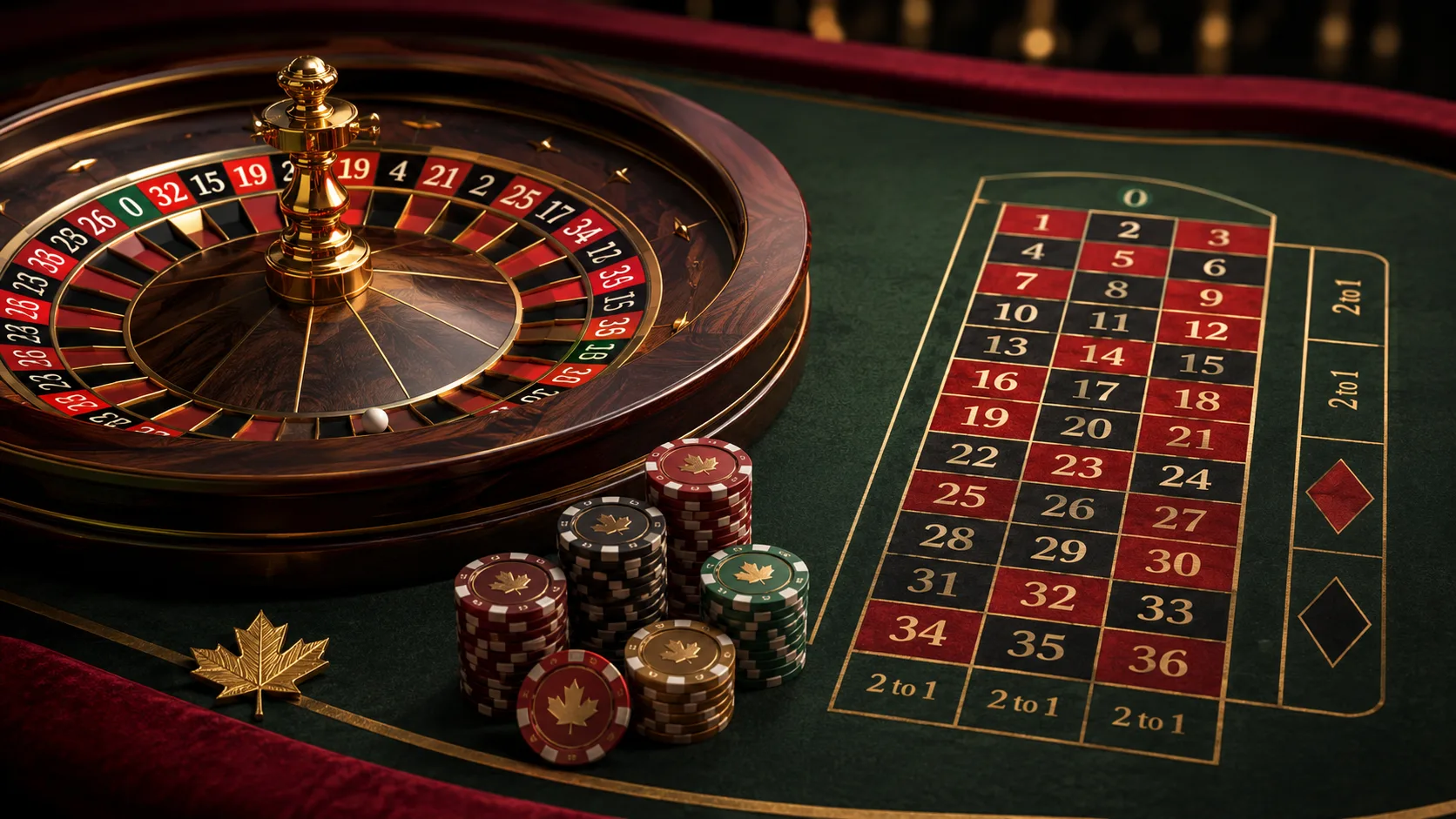
Single zero plus La Partage or En Prison creates the best commonly available roulette value.
The extra 00 nearly doubles the house edge compared with European roulette.
Inside bets pay more but hit less often. Outside bets win more often but pay less.
Betting progressions can change the shape of results, but not the house edge.
Variant choice is real strategy
European or French roulette matters far more than whether you follow Martingale, Fibonacci, or any other progression.
Bet type shapes the session
The main difference between inside and outside bets is volatility. One gives rarer, bigger hits; the other gives steadier, smaller ones.
Patterns do not predict spins
The wheel has no memory. Recent streaks can influence emotions, but they do not change the probability of the next result.
Roulette strategy in one minute
If you want the short version first, these are the decisions that matter most on a typical online roulette table.
- Pick French roulette first, European second, and American last. This choice matters more than any staking plan.
- Use outside bets if you want steadier sessions. Red/black, odd/even, and high/low win more often but pay 1:1.
- Use inside bets if you accept higher variance. Straight-up, split, and street bets create bigger payouts but much lower hit rates.
- Treat betting systems as variance tools, not edge tools. They can make wins and losses feel different without improving expected value.
- Always set a session budget before the first spin. Roulette is fast, and losses can accelerate if you react emotionally to streaks.
The single biggest decision: roulette variant
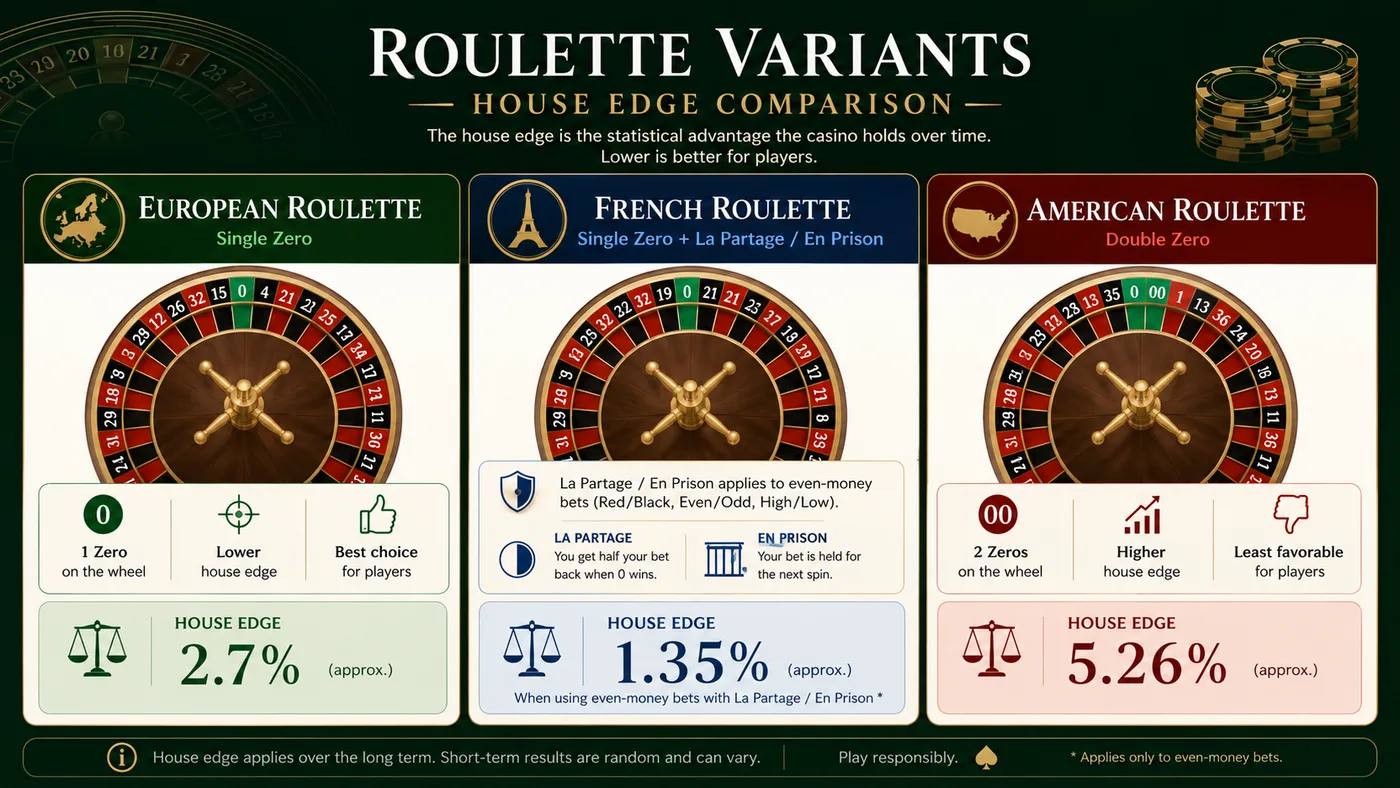
The wheel version changes the number of zero pockets. That single structural rule controls the house edge more than anything else on the page.
French roulette
French roulette uses the same single-zero wheel as European roulette, but adds La Partage or En Prison on even-money bets. That can cut the house edge on red/black, odd/even, and high/low to about 1.35%.
European roulette
European roulette carries a standard house edge of about 2.7%. It is the default good choice when French rules are unavailable, especially online where single-zero tables are common.
American roulette
American roulette adds the 00 pocket, pushing the house edge to about 5.26%. The table may look familiar, but the extra zero is a major downgrade for players.
Inside bets vs outside bets
Most roulette decisions come down to volatility preference. Both families of bets are easy to learn, but they produce very different session experiences.
Inside bets
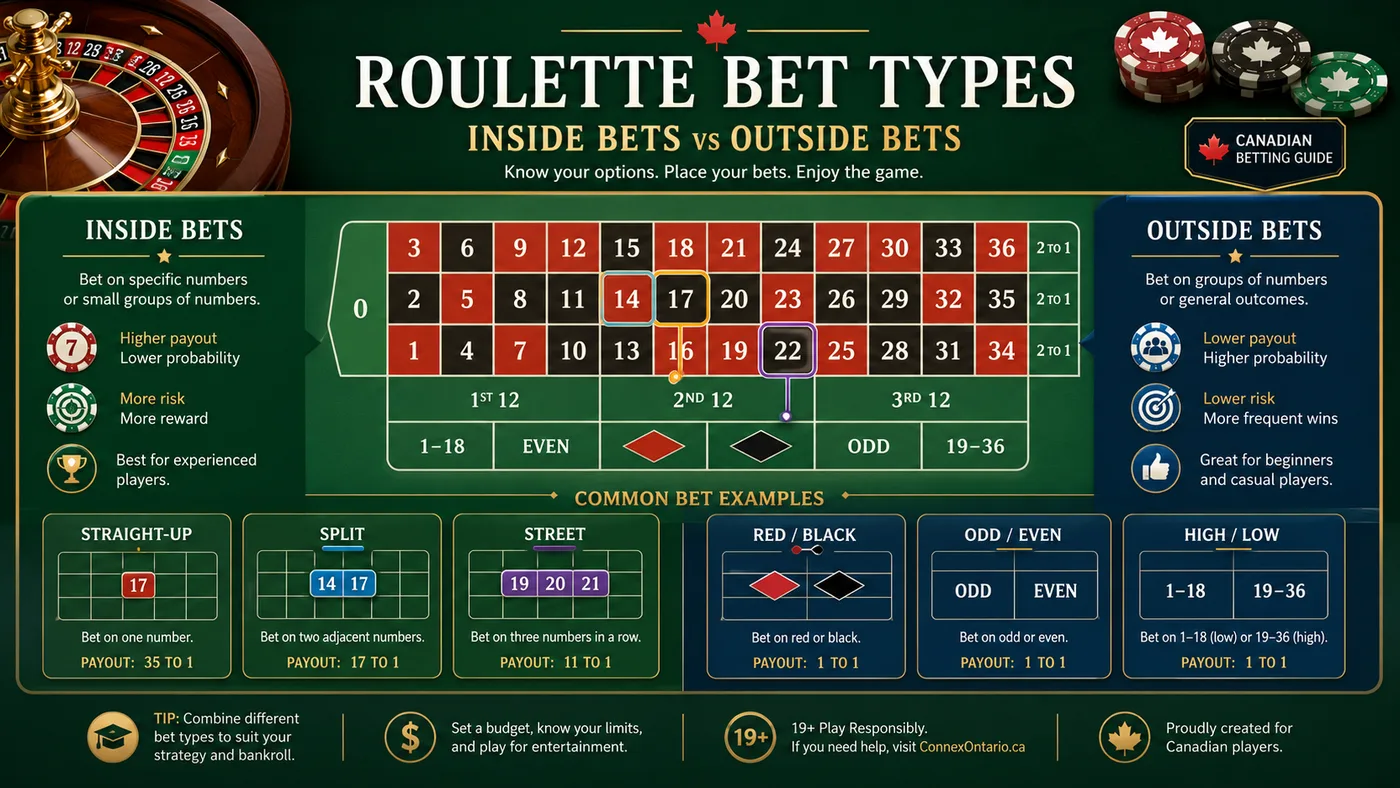
Inside bets are placed on the numbered grid. They pay more because you cover fewer outcomes.
- Straight-up: one number, pays 35:1.
- Split: two adjacent numbers, pays 17:1.
- Street: three numbers in a row, pays 11:1.
- Corner: four numbers, pays 8:1.
- Six-line: six numbers, pays 5:1.
Outside bets
Outside bets cover groups of numbers or broad outcomes. They pay less, but they connect more frequently and feel smoother over time.
- Red / black: pays 1:1.
- Odd / even: pays 1:1.
- High / low: 1-18 or 19-36, pays 1:1.
- Dozens: 1st 12, 2nd 12, 3rd 12, pays 2:1.
- Columns: one vertical column of 12 numbers, pays 2:1.
| Bet family | Typical examples | Payout range | Best for |
|---|---|---|---|
| Inside bets | Straight-up, split, street, corner, six-line | 5:1 to 35:1 | Players who want higher upside and accept longer dry spells. |
| Outside bets | Red/black, odd/even, high/low, dozens, columns | 1:1 or 2:1 | Players who prefer more frequent hits and a calmer session pace. |
An honest look at betting systems
Betting systems are extremely popular because they seem structured and disciplined. The problem is that they do not alter the zero pocket(s) on the wheel, which is where the house edge lives.
Martingale
Double after each loss, reset after a win. The appeal is obvious: one eventual win recovers the previous sequence plus one unit.
The risk is also obvious: losing streaks force the stake to explode rapidly, and table limits or bankroll limits end the progression before it can "save" the session.
Fibonacci
Increase stakes along the Fibonacci sequence after losses. It grows more gently than Martingale, but it still depends on the same flawed premise: that bet sizing can overcome a fixed house edge.
It changes volatility, not expectation.
D'Alembert
Increase by one unit after a loss and reduce by one after a win. This feels calmer than Martingale, but the mathematical reality is unchanged.
The wheel still has the same edge on every spin, no matter how elegant the progression looks on paper.
Best honest default: flat betting
Flat betting does not claim to beat roulette. It simply avoids the runaway exposure created by progressions. If your goal is to enjoy the game responsibly while keeping results understandable, a fixed stake per spin is the most transparent approach.
Myths that sound strategic but are not
Roulette creates strong pattern-seeking behavior. These habits are common, understandable, and mathematically unhelpful.
- "Red is overdue." Every spin is independent. A run of black does not make red more likely on the next result.
- "This number has not hit in 40 spins." The wheel has no memory. A cold number is still just one number among many.
- "This wheel section is hot." Recent spin trackers are historical records, not predictive tools.
- "If I keep adjusting the system, I can beat the edge." Systems can change risk profile, but not the value of the next spin.
Neighbour bets are about style, not edge
Wheel-neighbour and racetrack bets can be fun and more immersive, especially in live dealer roulette, but they do not improve the probabilities. They simply group numbers according to wheel position instead of the standard table grid.
Live vs RNG roulette
For a given variant, live and RNG roulette carry the same house edge. Choose based on pace, interface, and atmosphere - not because one format is secretly "looser" than the other.
How to structure a roulette session
The most useful roulette strategy is often a session framework rather than a spin-by-spin system. That means deciding on rules while you are calm, not while reacting to a streak.
1. Set a bankroll
Choose the exact amount you are comfortable losing before you open the table. That number is your session ceiling, not a target to "earn back."
2. Pick a table deliberately
Check the variant first, then the limits. French or European roulette with comfortable minimums should be your default search pattern.
3. Choose your volatility
Use outside bets for steadier play or mix in inside bets if you want more upside. Do not switch impulsively just because the last few spins were frustrating.
| Goal | Better fit | Why |
|---|---|---|
| Longest possible session | French or European roulette + mostly outside bets | Lower edge and more frequent wins create a smoother session path. |
| More excitement per spin | European roulette + selected inside bets | Higher payouts create bigger swings without accepting the American wheel's extra edge. |
| Responsible, simple play | Flat betting + fixed stop-loss | Transparent, easy to track, and less likely to spiral than progression systems. |