
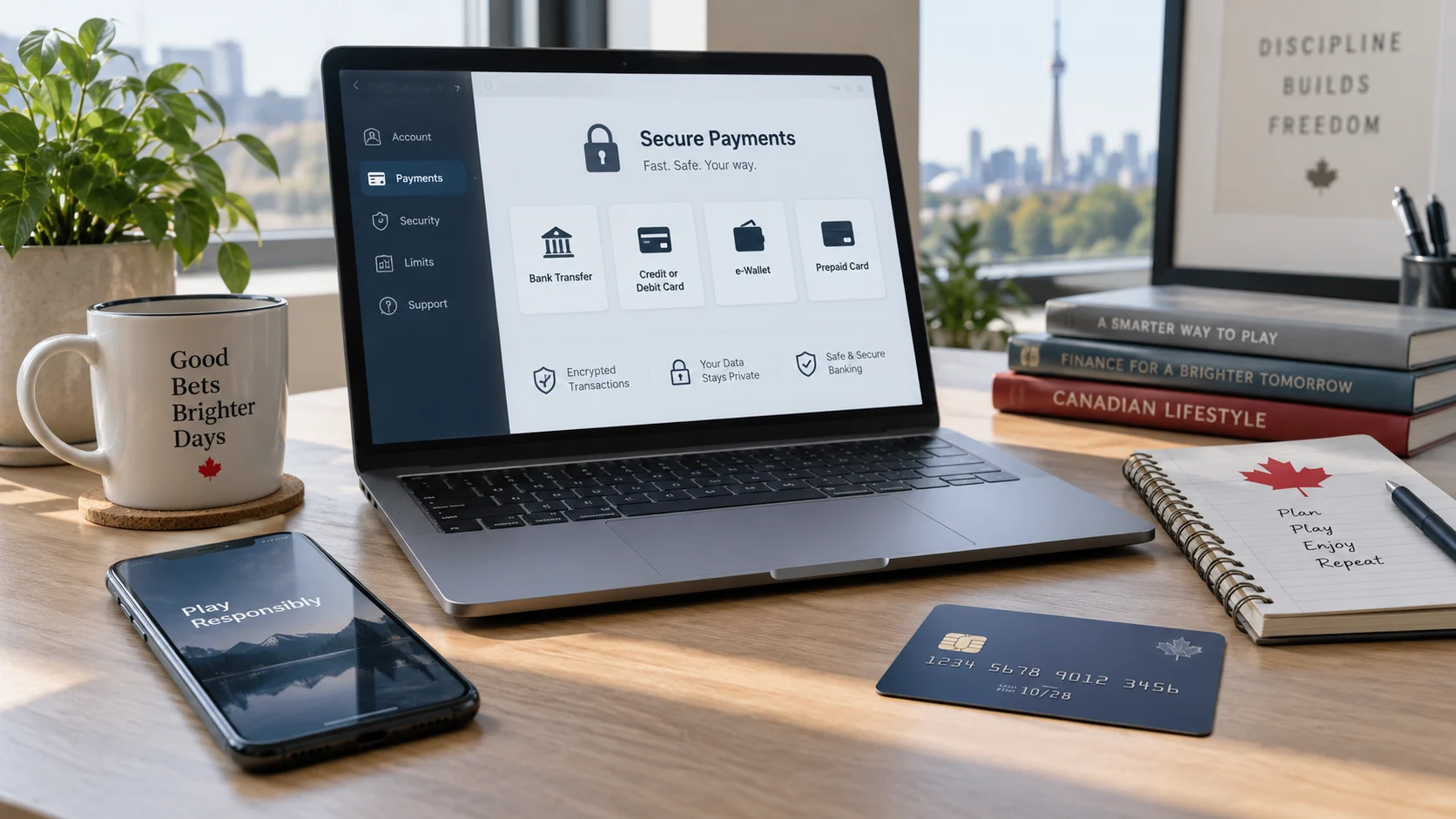
Getting money into and out of a betting account seems like it should be simple, and for the most part it is - but processing times, fees, and withdrawal rules vary more between payment methods than most bettors expect. This guide covers every major payment option available at licensed Canadian sportsbooks and casinos, how each actually works, and what to check before relying on one for your withdrawals specifically, since deposit speed and withdrawal speed for the same method aren't always equal.
Interac e-Transfer
Interac e-Transfer is, for the large majority of Canadian bettors, the default payment method, and for good reason: it's supported by essentially every Canadian bank, requires no separate account setup beyond what you likely already have through your bank, and typically processes deposits within minutes. To deposit, you're usually redirected to your online banking login (or prompted to send an e-Transfer to a designated email or reference number), and funds arrive in your betting account almost immediately once the transfer clears.
For withdrawals, Interac e-Transfer is also generally the fastest fully domestic option - many licensed operators process e-Transfer withdrawals within a day, some faster, once your account is verified (see the identity verification step in How to Bet Online in Canada). Because it's a direct bank-to-bank transfer denominated in Canadian dollars, there's no currency conversion involved and no third-party e-wallet balance to manage separately.
Interac Online
A related but distinct product from e-Transfer: Interac Online lets you pay directly from your bank account through a checkout-style flow (similar to a debit card purchase) rather than sending a discrete transfer. It's supported by a smaller number of Canadian banks than e-Transfer, but where available, it offers a similarly fast, direct bank connection without needing a credit card or third-party wallet.
Debit and credit cards
Visa and Mastercard debit and credit cards are widely accepted for deposits across licensed Canadian operators, and deposits typically process instantly. A few things worth knowing specifically about cards:
Withdrawals back to a card can be slower than to Interac - often several business days rather than same-day, since card withdrawals route through the card network's own settlement process rather than a direct bank transfer.
Some banks flag or decline gambling-related card transactions, even for fully licensed, legal operators, simply based on the merchant category code the transaction is processed under. If a card deposit is unexpectedly declined, this is a common - and usually resolvable - cause; contacting your bank directly is often the fastest fix, since it's typically a bank-side flag rather than an issue with the operator.
Credit card deposits are, in effect, a cash advance in many cases, which can carry different (often higher) interest terms than a standard purchase, starting to accrue interest immediately rather than after a standard grace period. This is worth checking with your card issuer before relying on credit for betting deposits regularly, both for cost reasons and because it touches directly on the kind of spending discipline covered in our Responsible Gambling Guide - funding gambling through credit, specifically, is a pattern worth being cautious about.
E-wallets
Digital e-wallet services let you hold a balance separately from your bank account and move funds to and from betting sites through that intermediary balance. E-wallets are popular for a few practical reasons: they can offer faster withdrawal processing than cards at many operators, they add a layer of separation between your bank account and the betting site directly, and they're often usable across multiple operators from a single funded wallet balance. The trade-off is an extra account to manage and, at some providers, a small fee for transfers in or out of the wallet itself. Confirm both deposit and withdrawal support for your specific e-wallet provider before relying on it, since support varies by operator.
Prepaid vouchers
Prepaid voucher products, purchased in-store or online for a fixed amount and redeemed as a deposit code, are supported by some operators as a deposit-only option - they generally can't be used for withdrawals, since there's no account to send funds back to. These are a useful option specifically for bettors who want to cap their spending to a fixed, pre-purchased amount without linking a bank account or card directly, functioning as a built-in spending limit in a similar spirit to the deposit-limit tools covered in Responsible Gambling Guide.
Cryptocurrency
A smaller number of operators, more commonly those licensed offshore rather than through Canadian provincial or AGCO frameworks, accept cryptocurrency deposits and withdrawals. Crypto transactions can offer fast settlement and low fees, but they also carry price volatility between the time of deposit and withdrawal, and using crypto specifically with an offshore-only operator compounds the reduced consumer protection already discussed in Is Online Betting Legal in Canada?. For bettors using a domestically licensed platform, crypto support is currently uncommon, and Interac or card-based methods remain the standard.
How verification interacts with your first withdrawal
Regardless of which payment method you use, your first withdrawal request at any operator will typically trigger a full identity verification check if it hasn't already been completed - this is a standard, legally required step covered in more detail in How to Bet Online in Canada, and it applies uniformly across payment methods rather than being specific to any one of them. Submitting your ID documents immediately after account creation, rather than waiting until you have a withdrawal to process, is the single most effective way to avoid a delay at the exact moment you're trying to access your funds - a delay that has nothing to do with which payment method you've chosen and everything to do with when verification was completed relative to the withdrawal request.
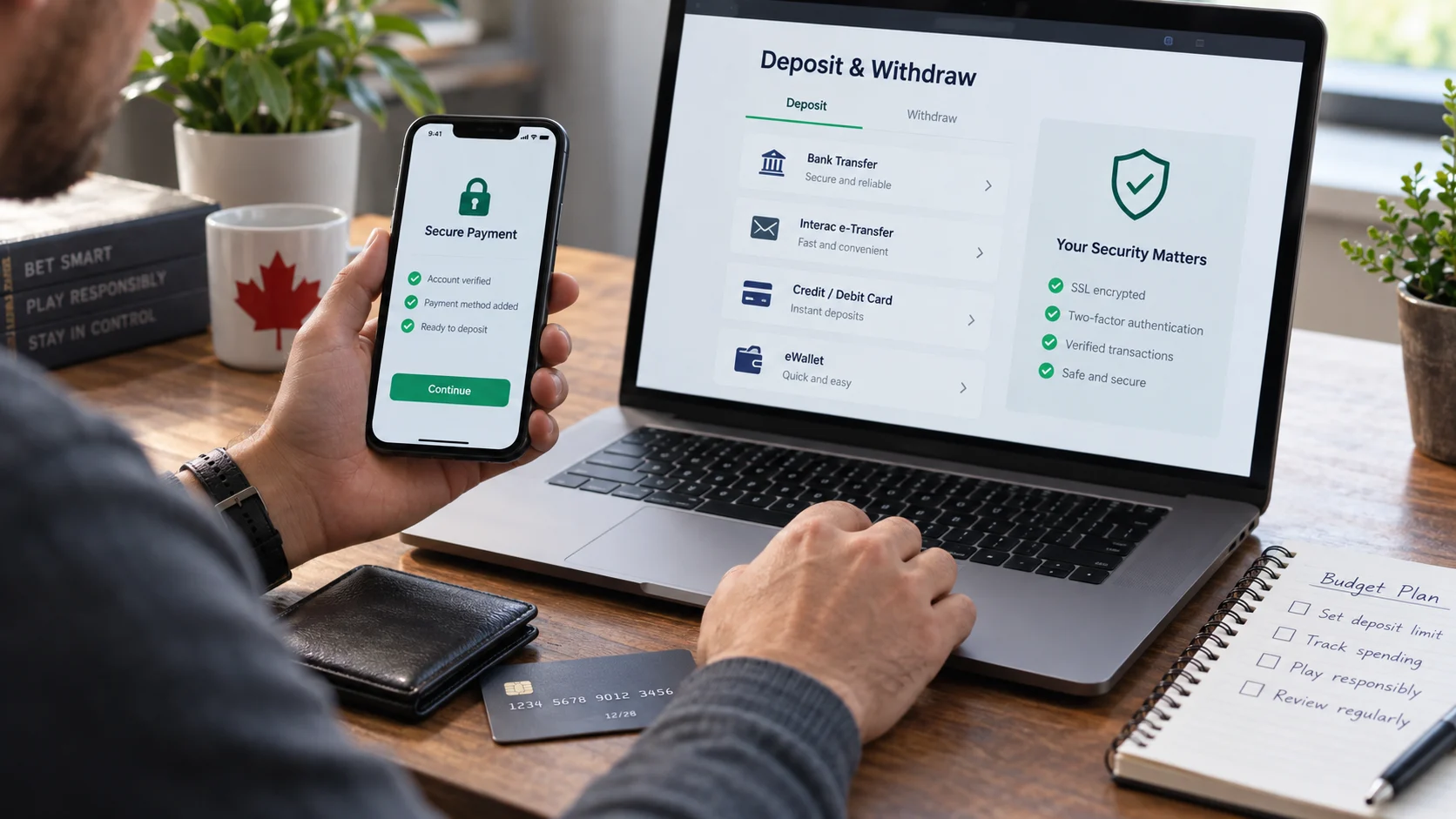
What to check before choosing a method
| Method | Typical deposit speed | Typical withdrawal speed | Notes |
|---|---|---|---|
| Interac e-Transfer | Minutes | Same day to 1-2 days | Widely considered the fastest, most direct domestic option |
| Interac Online | Instant | Varies by operator | Direct bank checkout flow, fewer supporting banks than e-Transfer |
| Debit card | Instant | Several business days | Withdrawal speed depends on card network processing |
| Credit card | Instant | Often not supported for withdrawal | May be treated as a cash advance by your issuer |
| E-wallet | Instant | Often same day | Requires a separate funded account |
| Prepaid voucher | Instant | Not supported | Deposit only; a natural spending cap |
Processing times vary by specific operator, and the figures above are general patterns rather than guarantees - always check the specific timelines listed by the operator you're using, which we verify directly as part of our sportsbook review methodology.
Fees
Most licensed Canadian operators don't charge their own fee for standard Interac or card deposits, and many also waive withdrawal fees, at least for a standard number of withdrawals per month. E-wallet providers sometimes charge their own transfer fees independent of the operator. Always check an operator's specific payments page for any fee schedule before assuming a method is entirely free - this is a detail worth confirming rather than assuming, since it varies meaningfully between operators even for the same payment method.
Security basics across every method
- Only enter payment details on the licensed operator's own site or official app, never through a link received via email or text message, which is a common phishing vector
- Use a unique password for your betting account, ideally paired with two-factor authentication where the operator offers it
- Monitor your bank or card statement periodically for any unexpected charges, the same way you would for any other online account
- Remember that withdrawals typically must return to the same method used for the original deposit, at least up to the deposited amount - this is a standard anti-money-laundering control across virtually every licensed operator, not something specific to any one platform
Currency considerations
Licensed Canadian operators typically process deposits and withdrawals in Canadian dollars by default, which avoids the currency conversion fees and exchange rate uncertainty that can come with an operator defaulting to USD. If you're using an operator that offers multiple currency options, or one primarily built around USD, confirm which currency your account actually operates in before depositing - a mismatch between your account currency and your bank or card's home currency can introduce a conversion fee on both deposits and withdrawals that has nothing to do with the operator's own posted fee schedule.
Bank statement descriptors
Deposits and withdrawals with a licensed gambling operator typically appear on a bank or card statement under a specific merchant descriptor, which may or may not clearly reference the operator by name - some use a generic payment processor name instead. If privacy around statement visibility (for a shared account, for instance) is a concern, it's worth checking an operator's payment FAQ or support resources for how their transactions are typically labeled, since this varies by operator and isn't always obvious in advance.
What happens if a deposit fails
A failed deposit is usually one of a small number of common causes: a bank-side block on gambling-related transactions (mentioned above under credit and debit cards), insufficient funds, an expired or incorrectly entered card, or a temporary issue with the payment processor itself. Most operators will show a specific decline reason where one is available; if not, contacting your bank directly is often the fastest way to confirm whether the block originated on their end. It's worth noting that a failed deposit attempt doesn't typically move any funds - declined transactions are not usually charged, though it's reasonable to confirm this on your statement if you're ever uncertain after a failed attempt.
Choosing a primary and backup method
Given that deposit and withdrawal speed can differ meaningfully by method even at the same operator, it's worth deliberately setting up more than one payment method on your account from the start - for example, Interac e-Transfer as your primary method for its withdrawal speed, with a debit card as a backup in case of a temporary issue with your bank's e-Transfer service. This is a small setup step that avoids being stuck without a working deposit or withdrawal option during an isolated technical issue with any single method.
Minimum and maximum limits
Every payment method carries its own minimum and maximum transaction limits, which vary by both the operator and the specific method - a minimum deposit is commonly somewhere in the $10-$20 range, while maximums are usually high enough that they rarely affect a casual bettor, though high-volume players should confirm the specific caps for their preferred method directly with the operator. Withdrawal limits are worth checking separately from deposit limits, since some operators cap the maximum single withdrawal amount or the total withdrawable per day or week, which can mean a large win takes several separate withdrawal requests to fully access rather than one.
Recordkeeping for your own tracking
Beyond what an operator shows in your account history, it's worth keeping your own simple record of deposits and withdrawals, particularly if you're using more than one operator or more than one payment method regularly. This doesn't need to be complicated - a basic spreadsheet noting date, method, amount, and direction (deposit or withdrawal) is enough to give you an honest, at-a-glance picture of your actual cash flow over time, which pairs naturally with the bet-level tracking recommended in Sports Betting Strategy and reinforces the budgeting habits covered in Responsible Gambling Guide.
Conclusion
For most Canadian bettors, Interac e-Transfer offers the best combination of speed, low cost, and simplicity for both deposits and withdrawals, which is why it's the default recommendation across this site. Cards remain a convenient deposit option but are worth pairing with a faster method for withdrawals specifically if speed matters to you. Whichever method you choose, confirming verification is complete before your first withdrawal request - covered in How to Bet Online in Canada - remains the single biggest factor in actually getting funds out quickly.